Bhaja Govindam Verse 8
का ते कान्ता कस्ते पुत्रः संसारोऽयमतीव विचित्रः ।
कस्य त्वं वा कुत आयातः तत्त्वं चिन्तय तदिह भ्रातः ॥ 8 ॥
kā te kāntā kaste putraḥ saṃsāro’yamatīva vicitraḥ |
kasya tvaṃ vā kuta āyātaḥ tattvaṃ cintaya tadiha bhrātaḥ || 8 ||
- he bhrātaḥ: Oh brother! te kāntā kā: who is your wife?; te putraḥ kaḥ: who is your son?; ayaṃ saṃsāraḥ: this worldly life; atīva vicitraḥ: is extremely strange
- tvaṃ kasya: whose are you?; tvaṃ kaḥ: who are you?; kutaḥ āyātaḥ: from where have you come?; iha: here (in this world); tat tattvaṃ: upon that truth; cintaya: reflect or think!
Summary: The Illusion of Worldly Relationships
Oh brother, reflect upon who your wife and son really are, because this worldly existence is highly strange and mysterious.
Inquire deeply into your own identity by asking yourself who you truly are and to whom you belong.
Contemplate upon this ultimate truth here and now to understand exactly from where you have come.
அன்னை எத்தனை எத்தனை அன்னையோ?
அப்பன் எத்தனை எத்தனை அப்பனோ?
பின்னை எத்தனை எத்தனை பெண்டீரோ?
பிள்ளை எத்தனை எத்தனை பிள்ளையோ?
முன்னை எத்தனை எத்தனை சன்மமோ?
மூடனாயடி யேனுமறிந்திலேன்,
இன்ன மெத்தனை யெத்தனை சன்மமோ?
என்செய் வேன்? கச்சி யேகம்பநாதனே?
– பட்டினத்தார்


- The Delusion of Family Bonds: Swamiji explains that in this verse, śaṅkarācārya is dealing with the deep-seated delusion surrounding family life. The primary goal here is to encourage us to pause and enquire into the absolute truth of our family bonds and relationships.
- Questioning Our Worldly Relationships: Addressing the spiritual seeker directly as he bhrātaḥ (oh brother), śaṅkarācārya instructs us to probe into the reality of our connections (tattvaṃ cintaya). He challenges us to ask: kā te kāntā (who is your wife?) and kaste putraḥ (who is your son?). The verse then shifts the focus inward to our own origins, asking to whom we ultimately belong (kasya tvaṃ vā) and from where we have arrived into this vast network of relationships (kuta āyātaḥ).
- The True Nature of the Mother’s Role: To understand this, the śāstra points out that no mother actually gives birth to the jīva. The jīva has already existed through endless pūrvajanma (previous births) and is a constant traveler in the cycle of life. The mother in this life is responsible only for giving birth to the present physical body, which serves as a temporary residence for a few years. Once the transactions in this body are complete, the jīva vacates the tenement, and in the next janma, another mother provides a new body. Therefore, from the standpoint of the physical body, there is a mother, but from the absolute standpoint of the jīva, there is not.
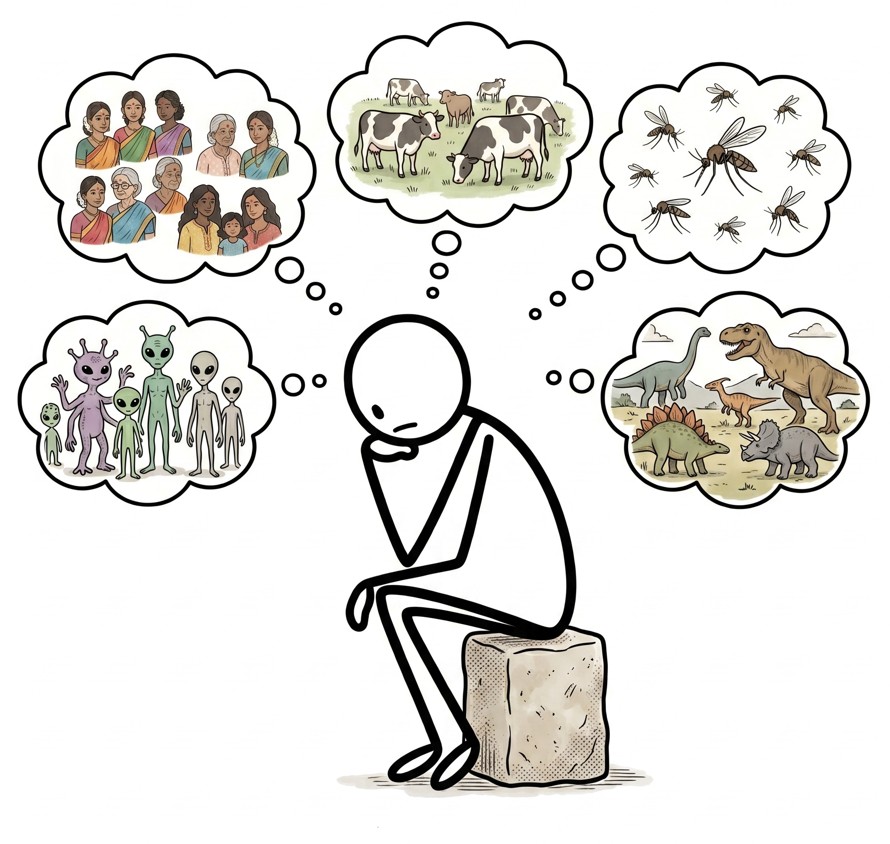
- The Perspective of Different Bodies: Looking purely from the standpoint of the current human body, we have specific human parents. However, if we were to imagine taking on a buffalo body in our next birth, we would have buffalo parents. Because the jīva has occupied millions of bodies in the past and will take on millions more in the future, it is impossible to single out one specific pair as our true parents. The more we study this reality, the more mysterious the concept of parentage becomes.
- The Mystery of Transmigration: If we try to trace when this journey started, we find it is an absolute mystery, stretching across beginningless and endless time. As the scripture states:
अव्यक्तादीनि भूतानि व्यक्तमध्यानि भारत
avyaktādīni bhūtāni vyaktamadhyāni bhārata
Because we have had countless parents across infinite lifetimes, we cannot logically remain hooked to any particular parent. Thus, ayam saṃsāraḥ (this life of transmigration) is incredibly mysterious (atīva vicitraḥ). It is impossible to point out any single jīva as your specific, permanent parent. - The Analogy of the Two Actors: Swamiji beautifully illustrates this truth using the example of two actors who play various roles in different movies. In one movie, they might put on the veṣam (costume/role) of daśaratha and rāma, acting out the relationship of father and son on stage. In another movie, the very same actors might take on the roles of dharmaputra and arjuna, behaving as brothers. From the standpoint of their stage roles, a relationship exists. However, once the drama ends and they step into the green room, removing their costumes, no such relationship remains. Similarly, people are related only from the standpoint of their bodily veṣam. In the “green room” of death, there is no father, mother, brother, or sister.
- Busting the Delusion: The ultimate lesson is that we must not become overly attached to these temporary, incidental roles. While we are meant to play our parts in the drama of life very well, we must remember the truth behind the stage. If there is one permanent, reliable relationship, it is only with govinda (bhagavan). By shifting our dependence away from the temporary drama and seeking that eternal truth (bhaja govindam), the delusion surrounding family life is thoroughly destroyed.